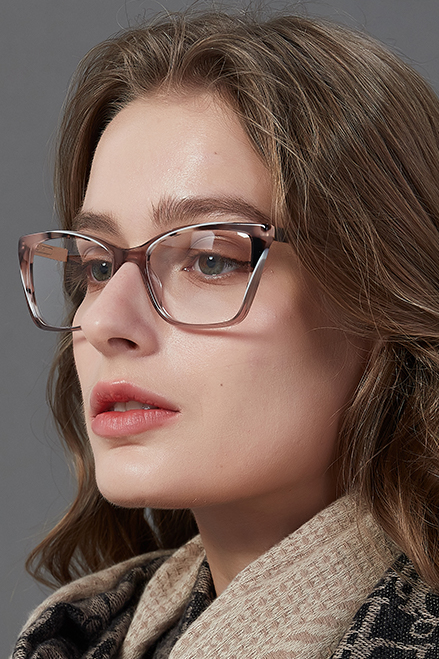



SILMO Paris 2026 has come to an end, but many of the conversations that started in Paris are only beginning.
For Guarken Eyewear, SILMO was more than an opportunity to present new optical frames, sunglasses and product developments.
It gave us the opportunity to meet eyewear brands, buyers, distributors and industry professionals from different markets — and to better understand what they expect from an eyewear manufacturing partner today.
One message became increasingly clear:
Eyewear brands are no longer simply looking for more frame styles.
They are looking for partners who can help them develop the right products, solve technical challenges and reproduce approved designs consistently in bulk production.
Guarken Eyewear is an OEM and ODM eyewear manufacturing partner supporting brands, wholesalers and retailers with product development, material selection, sampling, bulk production and quality control.
From early concepts to finished eyewear, our goal is to help customers turn ideas into products that are commercially relevant, manufacturable and ready for the market.
What Are Eyewear Brands Looking for in an OEM/ODM Manufacturer?
During our conversations at SILMO Paris, buyers were not only asking:
“What new frames do you have?”
More often, the conversation moved toward questions such as:
· Can you develop this idea into a manufacturable frame?
· Can the structure be modified for our market?
· Can we customize the material, color or temple details?
· Can the approved sample be reproduced consistently in bulk?
· How do you control quality during production?
· Can you support our brand beyond one single order?
These questions reflect an important shift in eyewear sourcing.
For many brands, choosing a supplier is no longer only about price or the number of available styles.
They are evaluating whether the manufacturing partner can support the complete product journey:
Concept → Development → Engineering → Sampling → Production → Quality Control → Delivery
This is where OEM and ODM capabilities increasingly need to work together.
What Is the Difference Between OEM and ODM Eyewear Manufacturing?
OEM and ODM are often mentioned together, but they support different stages of eyewear development.
OEM Eyewear Manufacturing
OEM projects usually begin with a relatively defined product.
The customer may already have:
· A finished design
· A technical specification
· A reference sample
· Defined materials and colors
· Logo and packaging requirements
The manufacturer's role is then focused on engineering, production feasibility, manufacturing consistency, quality control and delivery.
The main question becomes:
Can the approved product be reproduced reliably across the entire bulk order?
ODM Eyewear Development
ODM begins earlier in the product journey.
A brand may only have:
· A sketch
· A reference image
· A material direction
· A target customer
· A price positioning
· An initial design concept
The ODM partner helps transform that early direction into a manufacturable product.
This process may include:
· Frame design
· Structural development
· Material selection
· Color development
· Technical feasibility analysis
· Prototype development
· Sample refinement
· Production preparation
At Guarken, we support both OEM and ODM projects depending on the customer's development stage.
OEM | ODM |
Existing design or sample | Early concept or product direction |
Production-focused | Development + production |
Specifications mainly defined by buyer | Manufacturer supports development |
Main goal: manufacturing consistency | Main goal: create and manufacture |
Why Is ODM Becoming More Important for Eyewear Brands?
A good-looking frame is only the beginning.
Before an eyewear concept can become a successful commercial product, many questions need to be answered.
Does the proportion work on the face?
Can the structure be manufactured reliably?
Is the hinge position suitable?
Which material best supports the intended design?
Can the product move successfully from prototype to bulk production?
Will the target consumer actually want to wear it?
These questions should not only be considered after a sample has already been completed.
They should be part of the development process from the beginning.
At Guarken, our role is not simply to manufacture what appears in a drawing.
Our goal is to help transform a creative idea into an eyewear product that balances:
Design + Engineering + Manufacturing + Commercial Viability
How Does Guarken Develop an Eyewear Product from Concept to Production?
A typical Guarken ODM project may include six stages.
1. Project Brief
Before product development begins, we first try to understand the commercial direction of the project.
This may include:
· Target market
· Target customer
· Product category
· Style direction
· Price positioning
· Material expectations
· Quantity requirements
Understanding these factors early helps avoid developing a technically good product that does not match the customer's market.
2. Concept and Structural Development
Once the direction is clear, the idea needs to become a workable eyewear structure.
Important considerations include:
· Frame shape
· Dimensions
· Front curve
· Bridge structure
· Temple design
· Hinge position
· Overall proportions
· Wearing comfort
A visually attractive concept still needs to function as a real product.
3. Material and Color Selection
Material selection affects much more than appearance.
Depending on the project, Guarken supports development across materials and product directions including:
· Acetate
· Metal
· Titanium
· Injection materials
The material should support the design, manufacturing process, price positioning and intended product performance.
Color development can also be integrated into the project to create a more distinctive collection.
4. Sampling and Refinement
The first prototype is rarely the final answer.
During sampling, we may evaluate:
· Fit
· Proportion
· Frame balance
· Temple opening
· Hinge performance
· Material behavior
· Surface finishing
· Design details
Adjustments made during this stage can significantly improve the final production result.
5. Pre-Production Confirmation
Before bulk manufacturing, key specifications need to be clearly defined.
These may include:
· Dimensions
· Materials
· Colors
· Hardware
· Logo
· Surface finishing
· Tolerances
· Packaging
· Quality standards
The objective is to reduce ambiguity before production begins.
6. Bulk Manufacturing and Quality Control
A buyer is not purchasing one perfect sample.
They are purchasing hundreds or thousands of frames that should reproduce the approved result consistently.
That is where manufacturing control becomes critical.
Why Is OEM Consistency So Important?
One of the most important principles in eyewear manufacturing is simple:
A good sample does not automatically guarantee good bulk production.
A sample may have the correct:
· Color
· Polishing
· Alignment
· Fit
· Hinge movement
But the real manufacturing challenge begins when one frame becomes 500, 1,000 or several thousand.
At that stage, buyers need consistency in:
· Dimensions
· Frame alignment
· Temple balance
· Color
· Surface finishing
· Hinge performance
· Fit
· Packaging
For example, uneven temples in an acetate frame may appear to be a simple adjustment issue.
But the real cause can involve:
· Material stability
· Internal material stress
· Hinge position
· Frame structure
· Heating
· Assembly tolerance
· Processing consistency
This is why Guarken does not view quality control only as a final inspection.
Quality needs to be considered from development through production.
The objective is not simply to correct one defective frame.
It is to understand the cause and reduce the risk of the same issue appearing throughout an entire production run.
Why Does Material Expertise Matter in Eyewear Manufacturing?
Material is an increasingly important part of eyewear development.
Consumers may first notice:
Color. Texture. Transparency. Pattern.
Manufacturers and buyers, however, also need to consider what happens after the material becomes a finished frame.
For acetate eyewear, important considerations may include:
· Dimensional stability
· Thickness consistency
· Internal material stress
· Processing behavior
· Surface finishing
· Production repeatability
· Applicable compliance requirements
A beautiful acetate sheet is not automatically a successful eyewear product.
The material also needs to perform during cutting, forming, polishing, assembly and everyday use.
This is why we believe material selection should be considered together with product development rather than after the design has already been finalized.
The same principle applies to metal, titanium and injection eyewear.
Different materials create different design possibilities, but they also require different engineering and manufacturing solutions.
Buyers Need Better Product Direction — Not Simply More Frames
One of the clearest observations from an international eyewear exhibition is how much product choice already exists.
Thousands of frames may be displayed at one show.
But more choice does not necessarily make sourcing easier.
For buyers, relevance matters more.
One customer may need commercial acetate optical frames for the European market.
Another may be developing a lightweight titanium collection.
Another may need fashion-oriented sunglasses for e-commerce.
And another may arrive with only an idea for a completely custom product.
That means the supplier's role should not simply be:
“Here are more frames.”
A better question is:
“What are you actually trying to build?”
Once that is understood, product selection and product development become much more focused.
From Eyewear Manufacturer to Long-Term Development Partner
SILMO Paris 2026 reinforced a direction Guarken has been building toward for some time.
We do not want our value to be measured only by how many eyewear styles we can offer.
We want our value to come from our ability to support customers throughout the complete product process.
ODM Product Development
Supporting customers from early ideas, references and design directions through materials, structure, sampling and production preparation.
OEM Manufacturing
Supporting production-ready projects with manufacturing consistency, process control and quality management.
Material Expertise
Building deeper knowledge around acetate, metal, titanium and injection eyewear.
Technical Development
Understanding not only what a frame should look like, but also how structural and manufacturing decisions affect the final product.
Market-Oriented Collections
Developing products with clearer target customers, markets and commercial positioning.
Long-Term B2B Cooperation
Supporting eyewear brands, wholesalers, distributors and retailers beyond one single order.
For us, the goal is not simply to manufacture more eyewear.
The goal is to develop better products and build more reliable manufacturing partnerships.
What SILMO Paris 2026 Confirmed for Guarken
After conversations with eyewear professionals from different markets, several themes stood out.
1. Differentiation Matters
Buyers want products that feel distinctive while remaining commercially viable.
2. Materials Matter
Material is increasingly becoming part of product design, brand storytelling and quality performance.
3. ODM Is Becoming More Collaborative
Brands increasingly expect manufacturers to participate earlier in the product development process.
4. Manufacturing Reliability Remains Essential
Creative products still need stable and repeatable bulk production.
5. Long-Term Cooperation Creates More Value
A manufacturing partner who understands a brand's market and product direction can create more long-term value than a supplier focused only on individual orders.
These insights will continue to influence how Guarken develops its products, manufacturing capabilities and services after SILMO Paris 2026.
What Comes Next for Guarken?
The exhibition is over.
The development work continues.
In the coming months, Guarken will continue building a more complete professional platform around:
Eyewear Product Development
From initial concepts and references to structure, material selection and sampling.
OEM & ODM Manufacturing
Clearer development workflows and stronger manufacturing support.
Material Knowledge
More professional content and solutions around acetate, titanium, metal and injection materials.
Quality and Engineering
Sharing more knowledge about common eyewear production problems, their causes and how they can be controlled.
Market-Oriented Product Collections
Developing clearer product categories for different customer groups, markets and commercial needs.
Buyer Resources
Helping eyewear brands understand how development, materials, manufacturing and sourcing work in practice.
Our website will increasingly follow the same philosophy:
Not simply showing products, but helping customers understand how those products can be developed, manufactured and brought to market.
Frequently Asked Questions
What does an eyewear ODM manufacturer do?
An eyewear ODM manufacturer supports product development before bulk production.
This may include concept development, frame structure, material selection, color development, sampling, technical refinement and manufacturing.
Guarken supports projects that may begin with anything from a reference product to an early design idea.
What does an eyewear OEM manufacturer do?
OEM eyewear manufacturing usually begins with a relatively defined product specification, design or reference sample.
The manufacturer's role focuses primarily on engineering, production, quality consistency, process control and delivery according to the customer's requirements.
Can Guarken develop eyewear from a sketch or reference?
Yes.
An ODM project can begin with a sketch, reference image, existing sample, material direction or early product concept, subject to technical feasibility and intellectual-property considerations.
The concept can then move through product development, sampling and production preparation.
What types of eyewear can Guarken develop?
Guarken supports B2B optical frame and sunglasses projects with material solutions including acetate, metal, titanium and injection products depending on project requirements.
Can Guarken support both sample development and bulk production?
Yes.
One of the key objectives of the Guarken development process is to help move a product from concept and sampling into repeatable bulk manufacturing.
Product development and manufacturing therefore need to be considered together.
Why is acetate stability important in eyewear manufacturing?
Acetate stability can influence frame alignment, temple balance, fit and production consistency.
Material characteristics, frame structure and processing conditions can all affect the final result.
This is why material performance should be considered during product development rather than only during final inspection.
Who does Guarken work with?
Guarken primarily supports:
· Eyewear brands
· Wholesalers
· Distributors
· Retailers
· E-commerce eyewear businesses
· Other B2B eyewear partners
Projects can range from OEM manufacturing of established products to complete ODM development of new eyewear collections.
Planning Your Next Eyewear Collection?
Whether you already have a finished design, a physical sample, a reference image or only an early concept, the right development process can make the transition from idea to production much smoother.
OEM Manufacturing
For production-ready eyewear projects requiring stable manufacturing and quality control.

Get A Quote