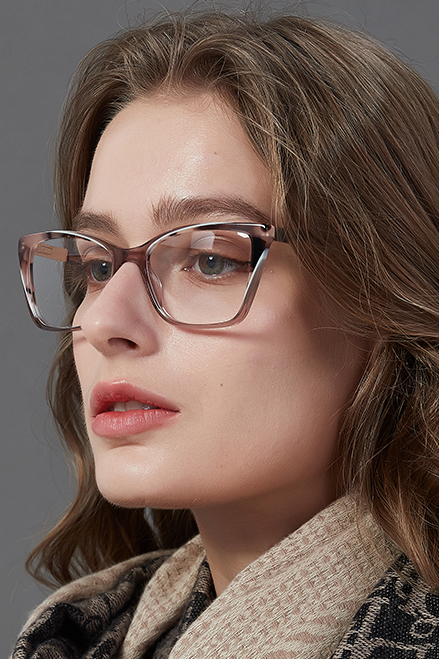



Acetate has always been one of the most expressive materials in eyewear.
Its rich colors, transparency, patterns and tactile quality give designers enormous creative freedom. And in 2026, acetate continues to play an important role in eyewear trends, from multicolored patterns and tortoiseshell effects to sculpted, statement-making frame shapes.
But for eyewear brands and buyers, there is another side of acetate that deserves just as much attention:
How does the material perform after the frame has been made?
A beautiful sheet of acetate is only the beginning.
For a successful eyewear collection, material performance can influence everything from frame alignment and production consistency to long-term wear and finishing quality.
1. Shape Stability Matters More Than It Looks
One of the most important considerations in acetate eyewear is dimensional stability.
During production, storage, transportation and everyday use, eyewear can experience changes in temperature and environmental conditions.
If the material or frame construction is not sufficiently stable, buyers may encounter issues such as:
· Frame front warping
· Uneven temple alignment
· Changes in fitting
· Shape inconsistency between samples and bulk production
This is why material evaluation should begin early in the development process.
At Guarken, we pay attention not only to how an acetate looks, but also to how it behaves once it becomes a finished frame.
Where applicable, material and finished-frame testing can also be used to evaluate performance under defined temperature conditions.
2. Surface Durability Is Part of the Customer Experience
The surface of an acetate frame is one of the first things a customer sees and touches.
Polishing, gloss, texture and finishing all contribute to the perceived quality of the product.
But appearance on day one is not enough.
During normal use, frames are repeatedly:
· Handled
· Cleaned
· Adjusted
· Placed on different surfaces
· Exposed to cosmetics, skin oils and environmental conditions
For this reason, surface durability should be considered alongside aesthetics.
A well-developed acetate frame should aim to maintain its finish through normal handling while meeting the visual expectations of the target market.
3. A Great Sample Must Also Be Repeatable in Production
This is especially important for B2B eyewear buyers.
A single sample may look excellent.
The real challenge begins when that sample becomes:
500, 1,000 or several thousand frames.
At that stage, consistency becomes critical.
Buyers should consider:
· Is the color consistent between production batches?
· Does frame alignment remain stable?
· Is polishing consistent across the order?
· Are dimensions controlled?
· Can the same visual result be reproduced reliably?
This is one of the reasons we believe material selection should be considered together with manufacturing capability.
Good design creates the first impression.
Reliable production turns it into a commercial product.
4. Material Compliance Should Be Discussed Early
For brands selling into different international markets, material compliance is another important part of product development.
Requirements can vary depending on the destination market, product construction and materials involved.
Rather than treating compliance as something to address at the end of an order, it is more efficient to discuss target markets during the early development stage.
This allows material choices, testing requirements and documentation needs to be considered before bulk production begins.
For European markets, for example, applicable REACH requirements may need to be considered depending on the materials and substances involved.
5. Why Acetate Performance Is Becoming More Important
Eyewear design is becoming more expressive.
Current collections are exploring stronger colors, multicolored patterns, sculpted volumes, tortoiseshell effects and more distinctive material combinations.
As acetate becomes more visually ambitious, the relationship between design and material performance becomes even more important.
For brands, the question should no longer be only:
“Does this acetate look good?”
It should also be:
“Can this material deliver the product consistently?”
That is where design, engineering and manufacturing need to work together.
From Material Selection to Market-Ready Eyewear
At Guarken Eyewear, we work with eyewear brands, wholesalers and retailers on ODM/OEM development from concept through production.
Our development process can include:
· Frame concept development
· Acetate and material selection
· Structural development
· Color development
· Sampling
· Production feasibility evaluation
· Quality control
· Bulk manufacturing
The goal is not simply to create a good-looking sample.
It is to develop eyewear that can move from an idea to a manufacturable, consistent and market-ready collection.

-
What are we bringing to Paris?
-
Beyond Color: What Eyewear Buyers Should Look for in Acetate Performance
-
Our Patented New Acetate Material: No More Deformation. No More High-Low Legs
-
Brand clients: How to put a "legal armor" on your eyewear designs?
-
Discover new eyewear possibilities at SILMO Paris 2026
-
From sketch to shipment: The complete ODM eyewear order process